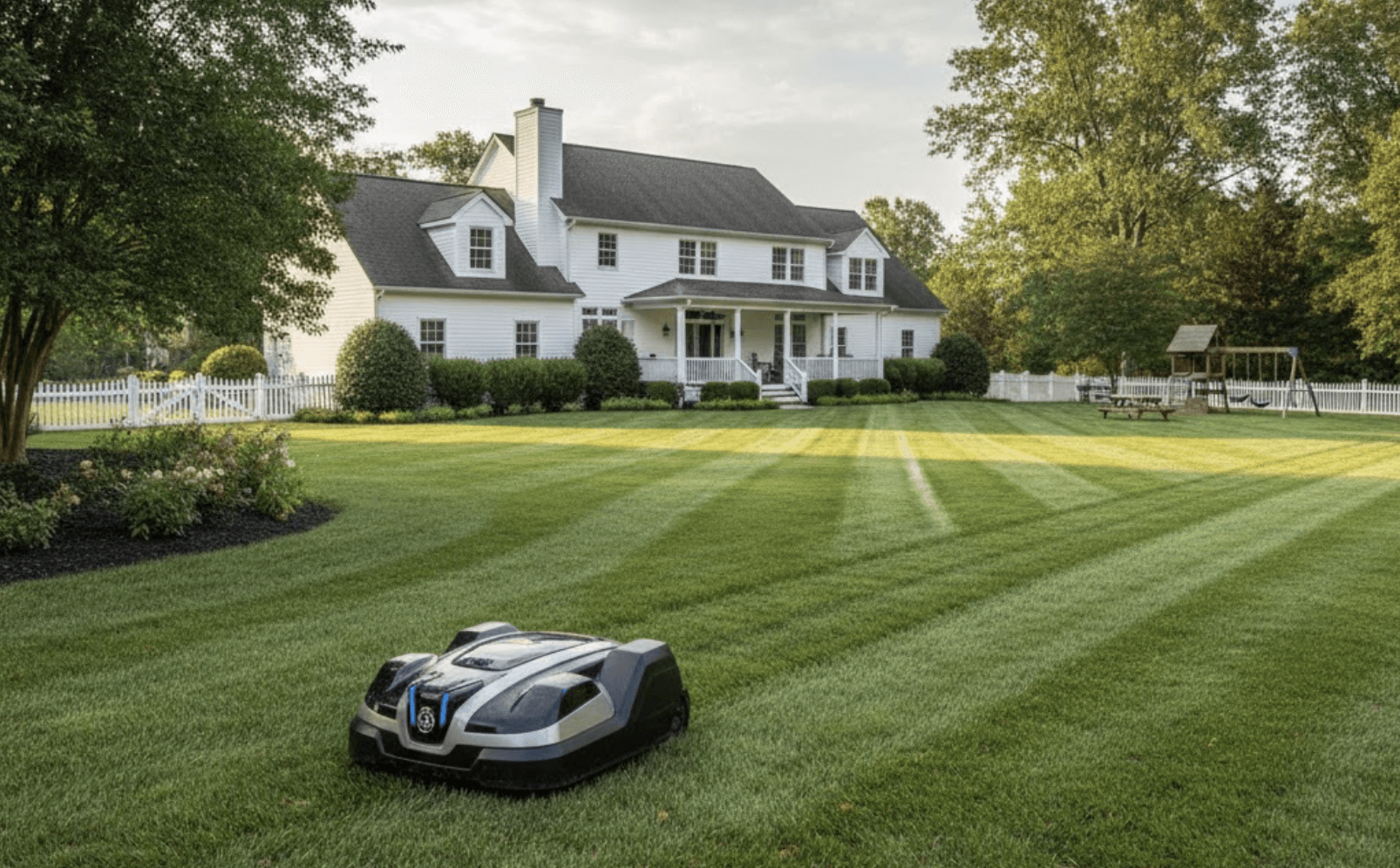


Most robotic lawnmowers have learned to “avoid obstacles.” The engineers at GOKO wanted theirs to understand.
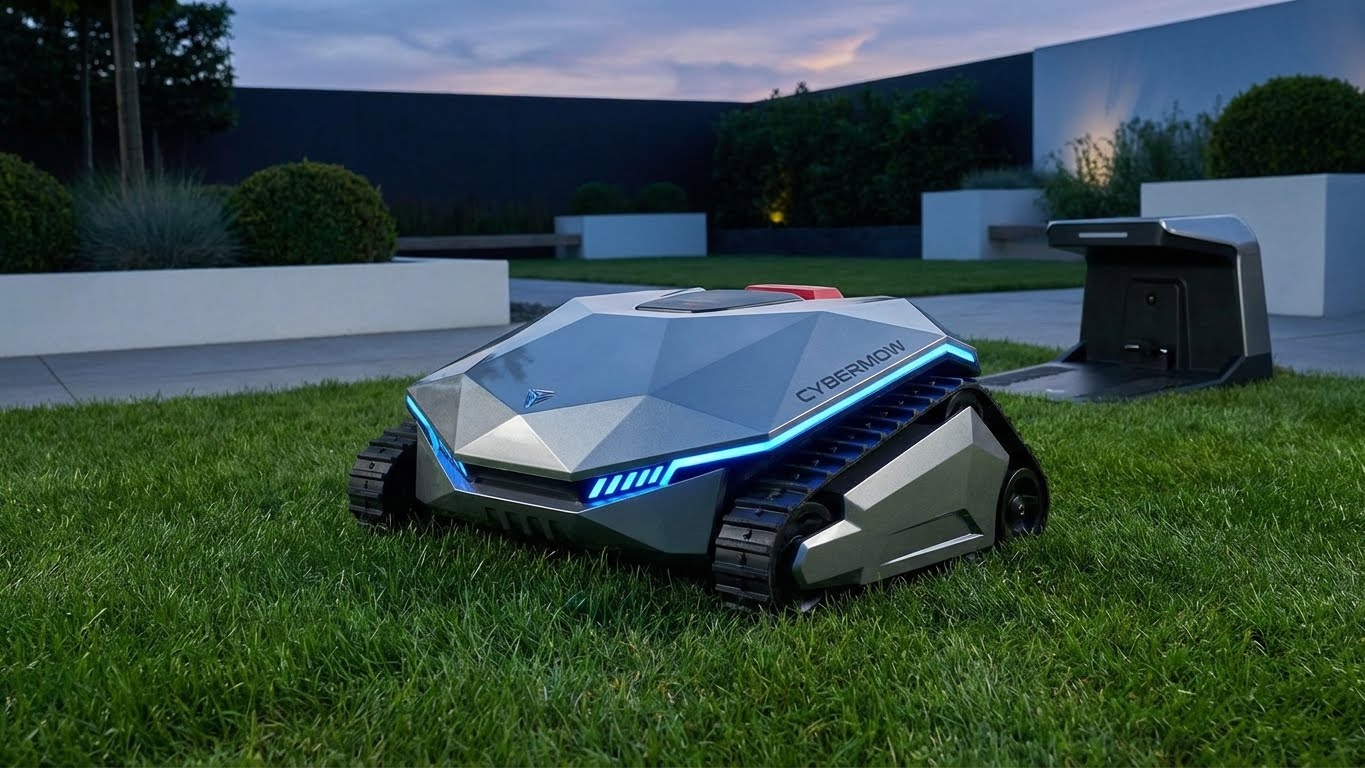
The newly unveiled GOKO Pro, a hulking, tank-treaded machine designed for estates, doesn’t just navigate your backyard. It perceives it. At its core is a sensing suite called QuadVision+, a system that represents a fundamental shift from treating a yard as a minefield of static obstructions to viewing it as a dynamic ecosystem teeming with life, valuable property, and unpredictability. This isn’t just a better bump sensor; it’s a step toward situational awareness for robots, moving them from blind task-executors to contextually intelligent agents.
“For a decade, the industry’s goal has been ‘don’t hit the tree,'” says Anya Sharma, GOKO’s Chief Perception Officer, who previously worked on autonomous vehicle systems. “Our goal is ‘the tree is a landmark, the dog is a moving entity with probable intent, the garden hose is a temporary object that can be gently pushed, and the prized Japanese maple is a no-fly zone.’ The difference between reacting and comprehending is everything.”
From 2D to 4D: Building a Living Map
The magic—and the immense computational challenge—lies in fusion. QuadVision+ employs four high-resolution stereoscopic cameras positioned around the mower, creating a continuous 360-degree field of view. This is the “bionic” part: inspired by predator vision, it uses overlapping sightlines for depth perception, much like human eyes.
But raw video feeds are just data. The system’s AI neural network, trained on millions of images and hours of video of real yards, acts as its brain. In real-time, it performs a staggering multi-step process:
- Semantic Segmentation: It classifies every pixel in its view. That is grass. That is a paved path. That cluster of pixels is a “shrub,” and that moving blob is categorized as “dog” with 99.7% confidence. It doesn’t just see an obstruction; it identifies it.
- Instantaneous 3D Modeling: Using depth information from the stereo cameras, it constructs a real-time 3D map of its surroundings. It knows not just that there’s “something” ahead, but that it’s a spherical object 20 inches in diameter hovering 2 inches off the ground (a soccer ball) versus an irregular solid mass sitting on the grass (a rock).
- Dynamic Tracking & Prediction (The 4th Dimension): This is where it leaves old-tech mowers in the dust. For moving objects like pets or people, the system doesn’t just note their position; it calculates their velocity and trajectory. It builds a short-term predictive model. “We’re not just asking ‘where is the dog?'” explains Sharma. “We’re asking ‘where will the dog be in 1.5 seconds based on its current path?’ This allows the mower to proactively adjust its own path, slowing down or carving a wider, smoother arc before a collision course is imminent. It’s polite, not panicked.”
The analogy to self-driving car technology is intentional and apt. Both use sensor fusion and AI to classify the world and predict behavior. But a yard presents a unique, arguably harder challenge than a structured road. “Highways have rules, lane markings, and predictable vehicle dynamics,” says Sharma. “A backyard has bouncing balls, toddlers that change direction instantly, and plastic bags blowing in the wind that you need to ignore. The ‘edge cases’ are the entire use case.”
Beyond Safety: The “Why” Enables the “How”
This deep understanding unlocks behaviors impossible for simple obstacle-avoidance bots.
- Differential Treatment: A low-lying garden hose might be gently nudged. A rigid toy truck is circumvented. A fragile decorative border is given a wide, software-defined buffer zone beyond its physical boundary wire. The mower knows a flower bed from a fence.
- Terrain Intelligence: The 3D map isn’t just for objects. It understands the terrain itself. A gentle slope is navigated at full speed. A steep, slippery incline triggers a specific “hill descent” mode, adjusting torque and speed. A muddy patch detected after a rainstorm might be temporarily logged as a “low-traction zone” to be approached with caution or skipped until drier.
- The Invisible Guardian: The ultimate goal is ambient, unnoticeable service. The promise of QuadVision+ is a mower you can truly forget about. You don’t need to clear the yard of toys before it runs. You don’t worry about it scaring the cat or decapitating your tulips. It operates with a level of spatial respect that borders on stewardship.
Of course, this requires serious onboard processing power. The GOKO Pro houses a dedicated AI accelerator chip, a mini-supercomputer that crunches the visual data locally without relying on cloud latency—a necessity for real-time reaction when a child runs into the yard.
The implications extend beyond a single product. GOKO is effectively building a comprehensive visual and spatial dataset of the private outdoor world. This “understanding” of yards could be the foundation for a broader ecosystem of outdoor robots—for weeding, clearing, or monitoring.
For now, QuadVision+ makes one thing clear: the frontier of home robotics isn’t just about doing a chore. It’s about interacting with the nuanced, living space of a home in a way that feels less like dealing with a tool and more like relying on a aware, capable, and remarkably considerate partner. The GOKO Pro isn’t just cutting grass; it’s learning the lay of your land.