
Beyond Charging: Pro Tips to Extend Your Robotic Mower’s Battery Life by 30%

For American homeowners who’ve invested in a robotic lawn mower, the battery isn’t just a component—it’s the heartbeat of the system. While most users focus only on charging habits, true battery longevity is a science governed by temperature, chemistry, and intelligent software management. By mastering these principles, you can realistically extend your battery’s effective lifespan by 30% or more, transforming it from a consumable expense into a durable asset.
The promise of a robotic mower is “set it and forget it.” However, neglecting the nuances of its lithium-ion battery can lead to a 20-30% capacity loss within just two to three years, forcing premature replacement or reducing your lawn’s coverage. This guide moves beyond the manual to reveal the professional-grade practices that keep your mower’s energy source performing like new, season after season.
The Lithium-Ion Reality: Why Your Battery Ages
To extend battery life, you must first understand its enemies. Inside every battery pack, lithium ions shuttle between electrodes. Three factors accelerate their degradation:
-
High State of Charge (SoC) Stress: Keeping the battery consistently at 100% charge creates intense internal pressure, stressing the cathode and accelerating the loss of active lithium.
-
Heat, The Silent Killer: For every 15°F (8°C) above 77°F (25°C), the rate of chemical reactions doubles. A battery left in a sun-baked garage in July is aging at a breakneck pace.
-
Deep Discharge Trauma: Regularly draining the battery below 20% strains the anode structure. It’s like repeatedly overstretching a spring—eventually, it won’t snap back.
The industry standard is roughly 500-1000 full charge cycles to 80% of original capacity. Our goal is to maximize every single cycle.
The Proactive Care Framework: Three Tiers of Battery Longevity
Think of this as a pyramid. Mastering the Base Tier ensures good health. Implementing the Advanced and Expert Tiers unlocks that 30%+ extension.
Tier 1: The Foundational Habits (The “Must-Dos”)
These are the non-negotiable practices that prevent immediate harm.
-
The 20-80% “Sweet Spot” Rule: Whenever possible, avoid routinely charging to 100% or draining to 0%. Modern battery management systems (BMS) already buffer these extremes, but you can assist. If your app allows (e.g., Goko’s scheduling), program mowing sessions to end with around 20-30% charge remaining. This minimizes deep-cycle stress.
-
The Cool-Down Rule: Never plug in a hot battery. After a long mowing session on a hot day, allow the mower to rest in the shade for 30-60 minutes before docking. Charging while hot causes irreversible lithium plating on the anode.
-
Winter Storage Protocol: As detailed in our winterization guide, store the battery at 40-60% charge in a climate-controlled environment (50-70°F / 10-21°C). A freezing garage or a scorching attic is a battery’s worst nightmare during dormancy.
Tier 2: The Advanced Optimization (The “Game Changers”)
This is where you start actively managing the system for longevity.
-
Leverage Smart Scheduling for Climate: Don’t let your mower bake. Program it to work during the coolest parts of the day—early morning or evening. This reduces the thermal load on the battery during both operation and the subsequent charge cycle.
-
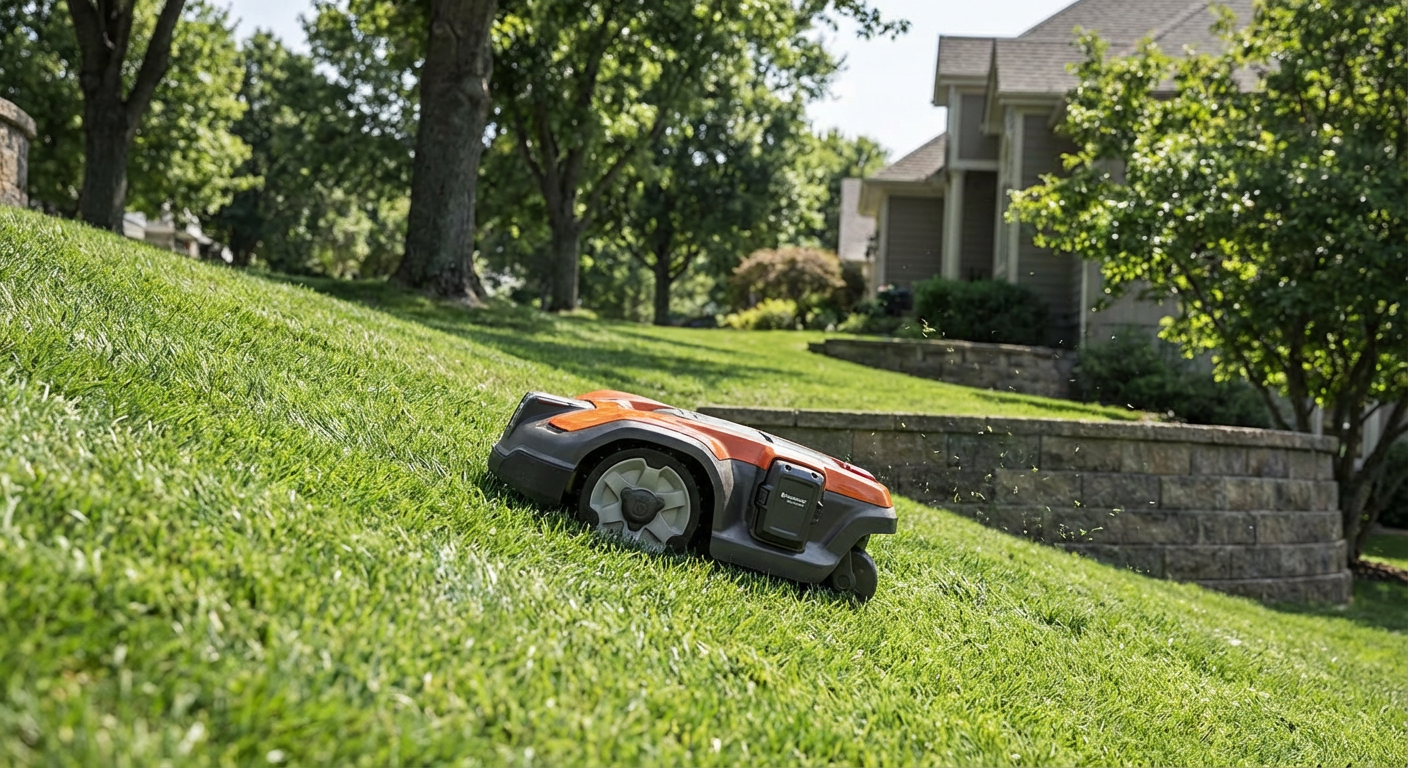
Understand Your Terrain’s Electrical Load: Mowing thick, wet grass or climbing steep slopes dramatically increases current draw (amps), which generates more internal heat and stress. For your toughest zones, consider:
-
Reducing mowing frequency slightly to keep grass shorter and easier to cut.
-
Using a “slope mode” if your mower has one, which may optimize power delivery.
-
-
Calibrate the Battery Gauge: Once per season, perform a full calibration. Let the mower run until it automatically docks due to low charge, then give it a full, uninterrupted charge. This resets the BMS’s understanding of 0% and 100%, ensuring accurate reporting and optimal charging logic.
Tier 3: The Expert-Level Integration (The “Master Class”)
For the tech-savvy user with high-end equipment.
-
Solar-Assisted Docking: If you have a model with a docking station featuring a solar panel (like some Goko stations), ensure it’s positioned for maximum sun. This trickle-charge can top off the battery during the day with low-current, low-heat energy, reducing the number of full-power grid charge cycles.
-
Analyze the Data: Use your mower’s app analytics. Look at runtime vs. area covered. A sudden decrease in efficiency (e.g., taking 50% longer to mow the same area) can indicate increased rolling resistance (check tires/wheels) or a failing motor component—both of which force the battery to work harder.
-
The “Partial Charge” Strategy for Large Lawns: If your property is at the upper limit of your mower’s capacity, don’t run it from 100% to 0%. Instead, schedule it to mow half the lawn, recharge to 80%, then finish. This keeps the battery in the middle of its charge range, which is scientifically proven to be the least stressful.
The Tools & Tech That Enable Longevity
Your mower’s own technology is your best ally.
-
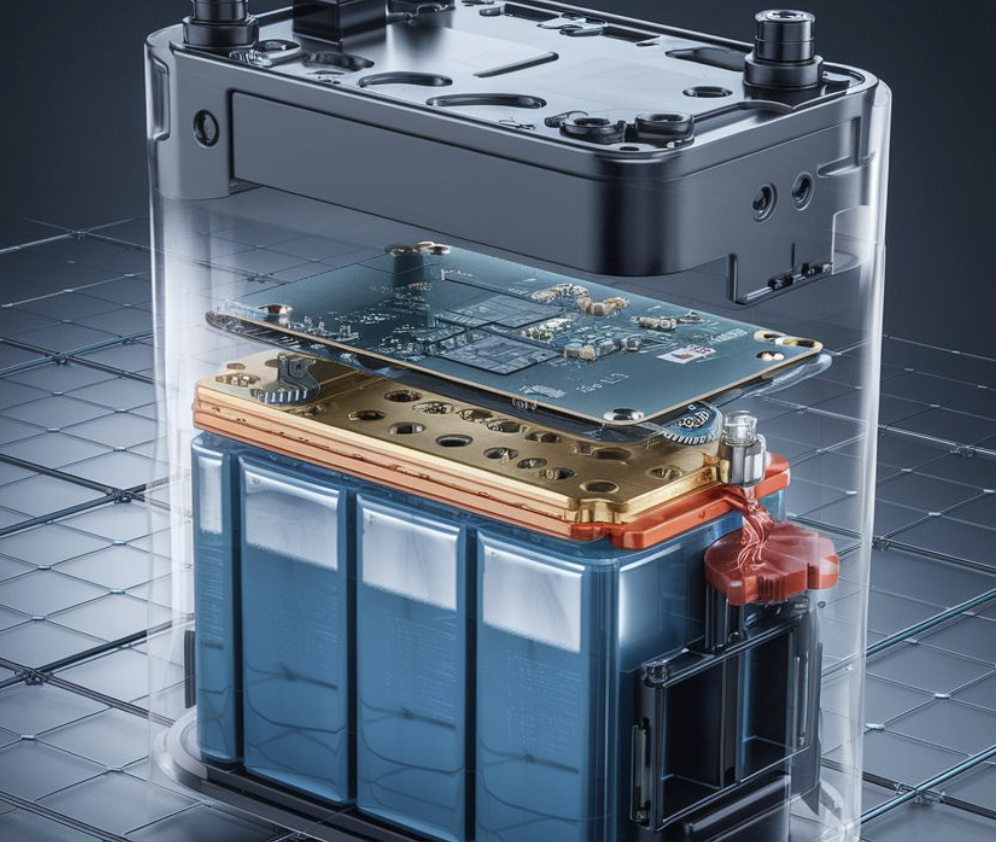
A Quality Battery Management System (BMS): A professional-grade BMS does more than prevent overcharge. It manages cell balancing, monitors temperature, and controls charge/discharge rates. This is why using OEM (Original Equipment Manufacturer) chargers and batteries is critical.
-
The App is Your Dashboard: Modern apps don’t just show a battery icon. They provide insights. Learn to read the charge/discharge curves and temperature data if available.
-
Invest in a Battery Tender/Maintainer (For Long Storage): For winter storage beyond 3 months, consider connecting the removed battery to a smart maintainer designed for lithium batteries. It will keep it at the perfect storage voltage automatically.
The 30% Payoff: Quantifying Your Return on Care
What does a 30% extension look like in practical terms?
-
Financial: A premium replacement battery can cost $500-$800. Delaying that purchase by 2-3 years has clear value.
-
Performance: Instead of struggling to cover 80% of your lawn on a single charge in Year 4, your mower will still reliably complete 95-100% of the job.
-
Convenience: You avoid the “battery anxiety” of an aging system that constantly needs mid-job recharges or fails to dock properly.
Conclusion: From Power Source to Managed Asset
Extending your robotic mower’s battery life isn’t about coddling a piece of hardware; it’s about practicing intelligent energy stewardship. You are no longer a passive user who simply charges a device. You become an active system optimizer, using schedule, data, and environmental awareness to dramatically slow the chemical clock inside your most critical component.
By adopting this holistic approach, you protect your investment, ensure consistent seasonal performance, and achieve the true “set-and-forget” reliability that justifies the premium of a smart lawn care system. The battery is the soul of your autonomous mower—nurture it with knowledge, and it will reward you with years of faithful, uninterrupted service.