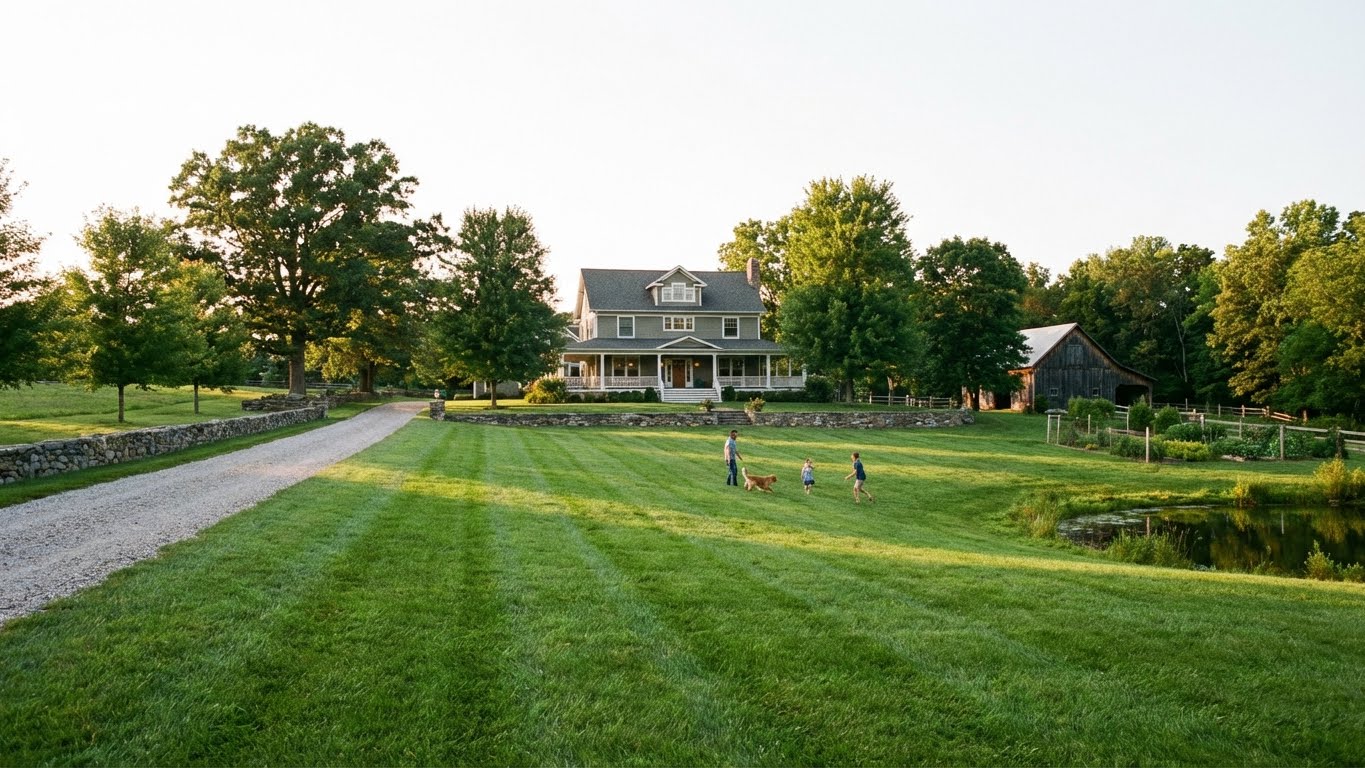


For decades, the American dream lawn has been sustained by a hidden nightmare: staggering water waste. The average suburban homeowner uses up to 60% of their summer water bill outdoors, often overwatering by 30-50%. The paradoxical truth is that the path to a lusher, greener, and more resilient lawn is paved with less—not more—water. Achieving this requires abandoning outdated schedules and embracing the science of plant hydration and modern smart technology.
Overwatering is not merely wasteful; it’s actively harmful. It promotes shallow roots, invites fungal disease, and leaches valuable nutrients beyond the root zone. This guide moves beyond the “set-it-and-forget-it” sprinkler timer mentality, introducing a precision-based, system-thinking approach to irrigation. You’ll learn how to work with natural processes and intelligent devices to create a lawn that is not only more beautiful but profoundly more self-sufficient.
Part 1: The Hydrological Foundation – How Grass Drinks
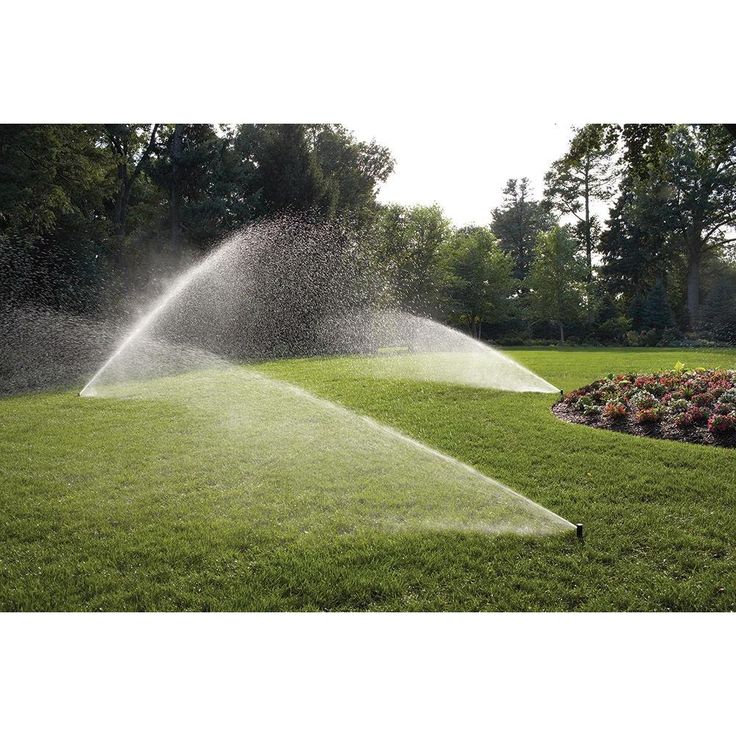
To water wisely, you must first understand the mechanics. Grass absorbs water through its roots via capillary action and osmosis. The goal is not to wet the surface, but to fully saturate the root zone—the critical soil volume where roots live and feed.
-
The Root Zone Target: For a healthy lawn, you want roots to reach at least 6 inches deep. Your watering should therefore moisten the soil to a minimum depth of 6-8 inches.
-
The “Soak and Dry” Cycle is Crucial: After deep watering, you must allow the top 2-3 inches of soil to dry out completely before watering again. This drying period is not stress; it’s the signal that forces roots to grow deeper in search of moisture, building a drought-resistant foundation.
-
The Enemy of Roots: Shallow, Frequent Sips: Daily watering for 10-15 minutes only dampens the top inch of soil. Roots have no incentive to grow downward, creating a weak, thirsty lawn entirely dependent on your hose.
Part 2: The Three Cardinal Sins of Traditional Watering (And How to Stop)
Sin #1: Watering on a Calendar Schedule
-
The Problem: Watering every Monday, Wednesday, and Friday regardless of weather, temperature, or rainfall.
-
The Wisdom: Your lawn’s water needs change daily based on evapotranspiration (ET)—the combined water loss from soil evaporation and plant transpiration. A cool, cloudy day in spring demands far less than a hot, windy day in July.
-
The Fix: Decouple from the calendar. Base watering on actual need.
Sin #2: Watering in the Evening
-
The Problem: Watering after 6 PM leaves grass blades wet for 12+ hours overnight.
-
The Wisdom: Extended moisture on the blade is the primary catalyst for fungal diseases like brown patch, dollar spot, and mildew.
-
The Fix: Water in the early morning (4 AM – 8 AM). This minimizes evaporation from sun and wind, allows for deep soil penetration, and gives blades time to dry completely during the day.
Sin #3: Ignoring Soil Type and Runoff
-
The Problem: Applying the same amount of water to clay soil (which absorbs slowly) and sandy soil (which drains rapidly).
-
Wisdom: Clay needs slower, longer applications to avoid runoff. Sand needs shorter, more frequent cycles to prevent water from vanishing beyond the root zone.
-
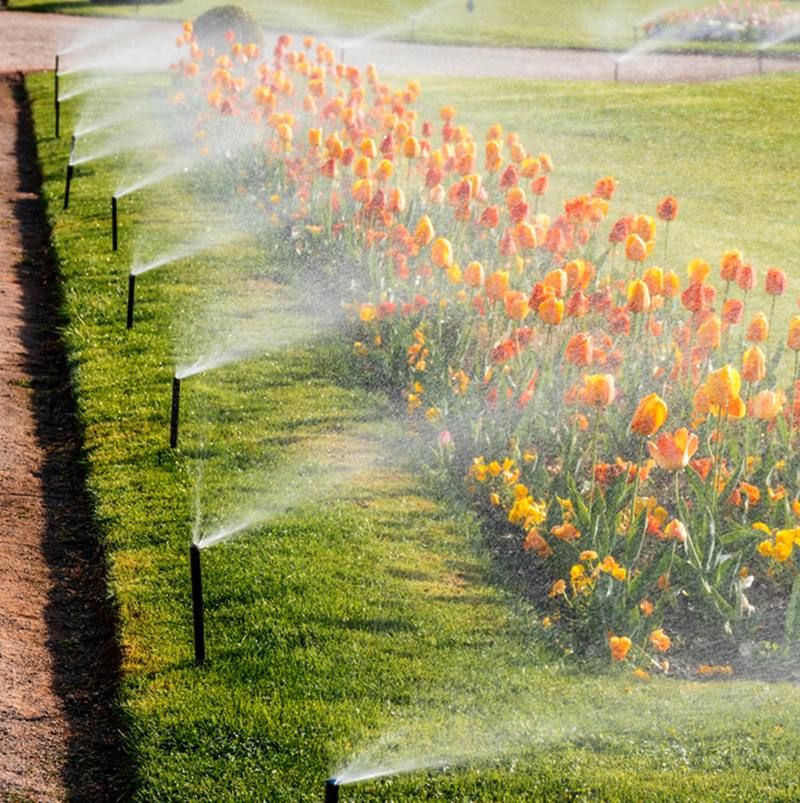
The Fix: Cycle and soak. For slopes or clay soil, break your total watering time into two or three shorter cycles spaced an hour apart. This allows water to infiltrate without waste.
Part 3: The Precision Watering System – A Step-by-Step Strategy
Step 1: The “Tuna Can” Calibration Test
Determine how long it takes your system to deliver the right amount of water.
-
Place several empty, flat tuna cans or rain gauges around your lawn.
-
Run your sprinklers for 15 minutes.
-
Measure the water in each can and average it. (e.g., average = 0.25 inches).
-
Calculate: To apply 1 inch of water (enough to soak 6-8 inches deep in most soils), you would need to run your system for 60 minutes (1 inch / 0.25 inches per 15 min = 60 min).
Step 2: Determine Your Lawn’s Actual “Thirst” (The Weekly Water Budget)
Your lawn doesn’t need 1 inch every time. Its needs are dynamic.
-
The Simple Rule of Thumb: In peak summer, most cool-season grasses need about 1 to 1.5 inches of water per week, including rainfall.
-
The Smart Method: Use free online ET (Evapotranspiration) data from your local weather station or cooperative extension service. If ET for the week is 1.4 inches and you got 0.3 inches of rain, your sprinklers only need to supply 1.1 inches.
Step 3: Implement the “Deep and Infrequent” Schedule
-
Frequency: 1-2 times per week, max. This is non-negotiable for root depth.
-
Duration: Based on your “Tuna Can” test and weekly water budget. If your system applies 0.5 inches in 30 minutes and your lawn needs 1 inch this week, water for 60 minutes total per week.
-
Split Application: Apply half the water on Wednesday morning, half on Saturday morning. This is better than one massive, runoff-prone session.
Part 4: The Technology Multiplier – How to Automate Wisdom
This is where modern technology transforms theory into effortless, perfect practice.
1. The Smart Irrigation Controller (The Brain)
-
What it is: A Wi-Fi connected controller (e.g., Rachio, RainMachine, Orbit B-hyve) that replaces your old timer.
-
How it applies wisdom: It automatically adjusts your schedule based on hyper-local weather data (ET, rainfall, temperature, wind). If it rains 0.5 inches on Tuesday, it skips Wednesday’s cycle. If a heatwave hits, it adds time. It eliminates all guesswork and calendar-based sin.
2. In-Ground Soil Moisture Sensors (The Nervous System)
-
What it is: Sensors buried in the root zone that measure actual soil water content.
-
How it applies wisdom: It overrides the controller if the soil is already sufficiently moist from rain or dew, preventing overwatering absolutely. It is the single most effective tool for conservation, often reducing water use by 20-50%.
3. Your Robotic Mower as a Data Scout (The Ecosystem Partner)
-
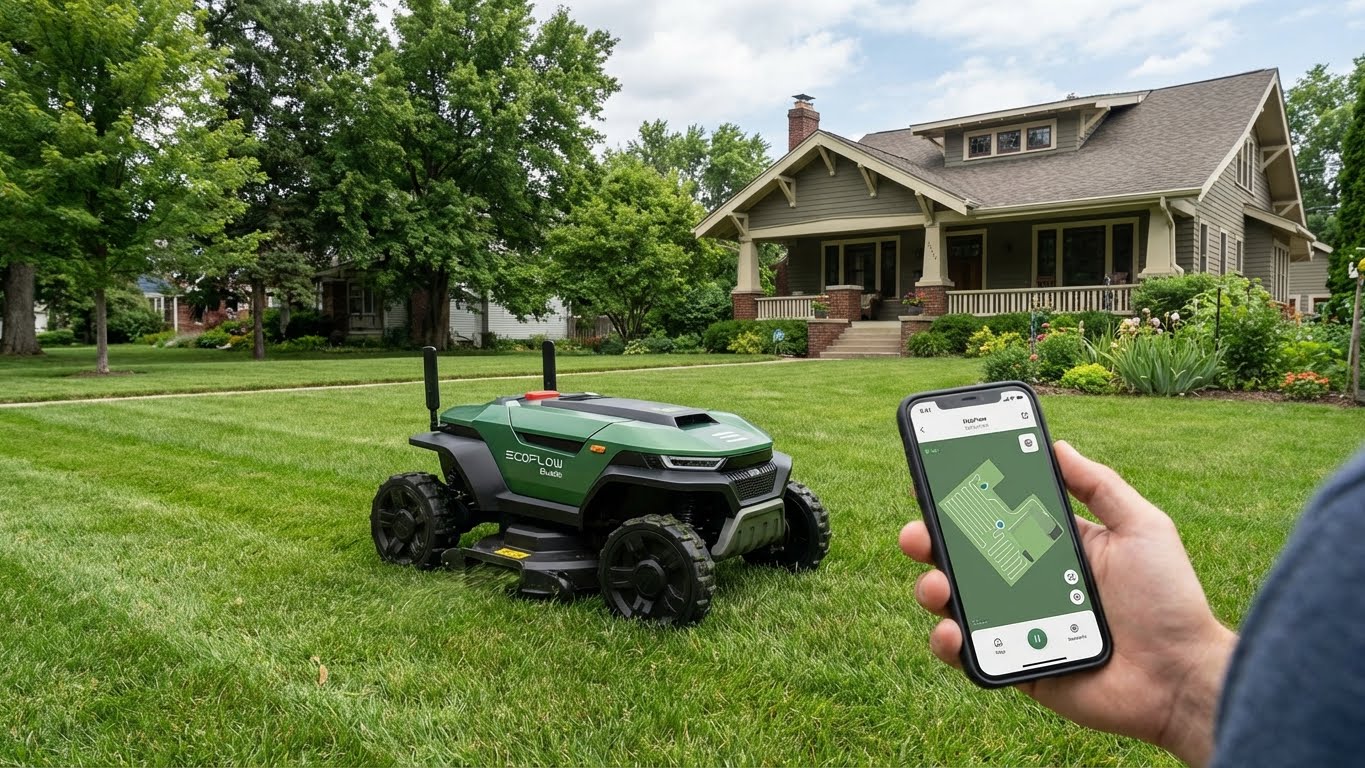
How it applies wisdom: A smart robotic mower (like Goko) working in tandem with your irrigation system creates a powerful synergy.
-
Sequential Scheduling: Program your mower to cut a zone before it is irrigated. Shorter grass allows for better water penetration to the soil.
-
Soil Hardness Data: Advanced mowers can infer soil conditions from motor load. Hard, dry soil makes the mower work harder—this data could one day inform your irrigation system.
-
The Ultimate Efficiency Loop: Imagine a system where the mower finishes the backyard at 7 AM, and the smart controller, knowing the soil is dry from its sensor and that no rain is forecast, waters the backyard at 8 AM. This is intelligent landscape management.
-
Part 5: Cultural Practices – Make Every Drop Count
Technology is amplified by smart horticulture.
-
Mow High: Keep grass at 3-4 inches. Taller grass shades the soil, reducing surface evaporation and keeping roots cooler.
-
Aerate Annually: Core aeration relieves compaction, allowing water to infiltrate faster and deeper, not run off.
-
Use Hydrophobic Soil Amendments: In sandy soil, adding organic matter (compost) increases water retention. In clay, it improves drainage.
-
Embrace Dormancy: For cool-season grasses, it’s normal and healthy to go golden-brown during periods of extreme summer heat and drought. It will green up with fall rains and cooler temperatures. Watering heavily to prevent this dormancy is wasteful and stresses the plant.
Conclusion: The Paradigm Shift – From Waterer to Water Manager
The journey to a greener lawn with less water is a shift from consumption to stewardship. You are no longer merely a supplier of a resource, but a manager of a sophisticated biological and technological system.
By applying deep watering principles, leveraging smart technology to respond to real-time conditions, and integrating the care of your entire landscape, you achieve a profound outcome: a lawn that is more resilient, less expensive to maintain, and breathtakingly green—not in spite of using less water, but because you are using it wisely. You stop watering the pavement and start nourishing the roots, one intelligent drop at a time. This is the true watering wisdom for the modern American homeowner.