
Stop Making These 5 Large Lawn Care Mistakes (Smart Fixes Inside)

For American families with over an acre of lawn, yard care often transforms from a point of pride into a persistent burden. The core issue isn’t the workload itself, but widespread strategic mistakes that drain your time, money, and prevent you from achieving that dream of a thick, healthy, vibrant green carpet.
Maintaining a large lawn is fundamentally different from tending a small backyard. The scale magnifies the consequence of every minor error tenfold. This article reveals the five most common and costly mistakes and provides a clear path from traditional methods to cutting-edge intelligent solutions.

Mistake #1: Over-Reliance on “Cyclical Heavy-Duty Mowing”
The Mistake:
The “Saturday morning ritual” of a single, thorough cut with a large riding mower. This is a high-intensity, low-frequency “shock treatment” approach.
Why It’s Wrong:
-
Plant Stress: Removing more than one-third of the grass blade at once places severe stress on the turf. The plant diverts precious energy to emergency repair instead of healthy growth, leading to shallow roots and reduced resilience.
-
Weed Paradise: After each heavy cut, the lawn thins temporarily, exposing soil and providing perfect light and space for weed seeds (like crabgrass, dandelions) to germinate.
-
The “Roller Coaster” Look: Your lawn cycles weekly from “freshly cut” to “slightly shaggy” to “desperately needs mowing,” never achieving that consistent, envy-inducing manicured appearance.
-
Soil Compaction: Heavy riding mowers repeatedly compact the same soil, crushing its air pockets and drainage capacity, further choking the grassroots.
The Traditional Fix:
Increase mowing frequency to twice a week, ensuring you only remove the grass tip (the “One-Third Rule”). Use lighter equipment or vary cutting heights.
The Intelligent, Ultimate Solution:
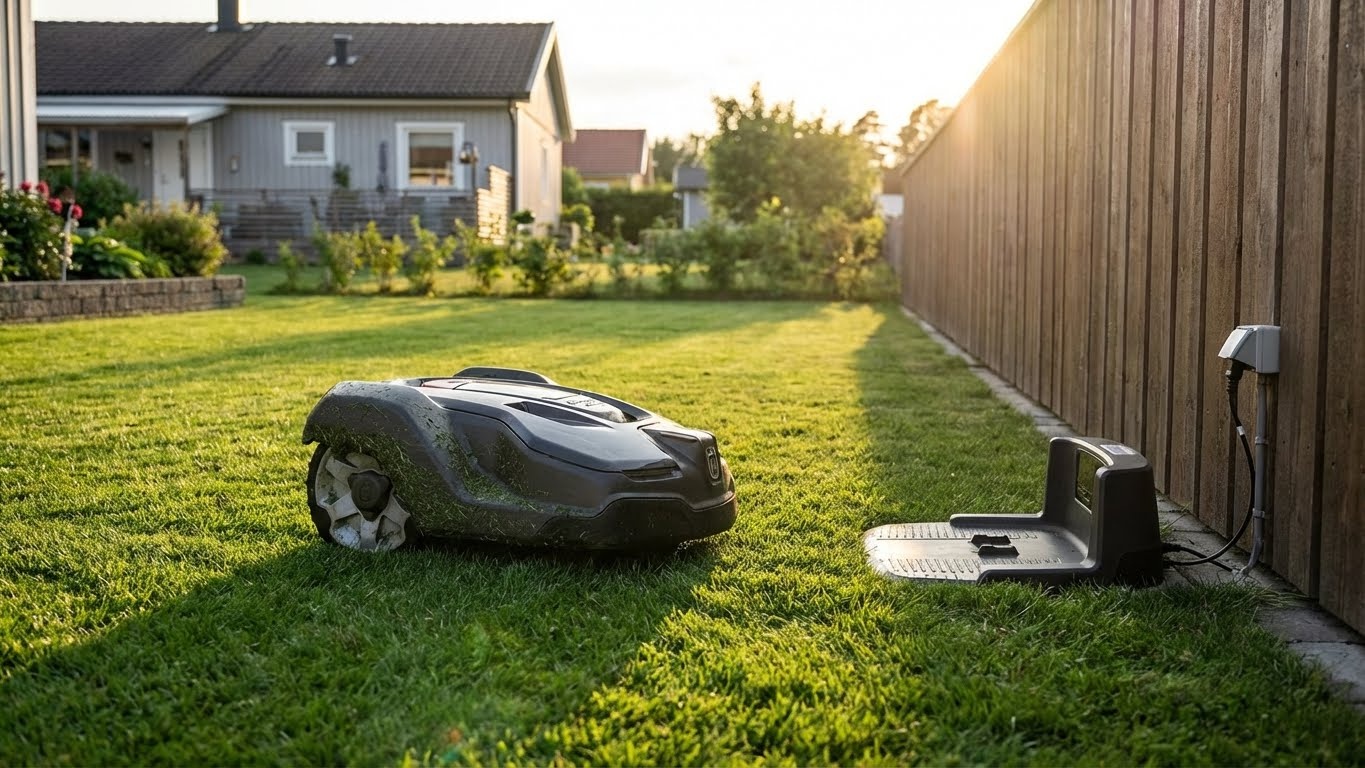
Adopt the “Continuous Micro-Mowing” principle of a robotic lawn mower. High-end models like Goko can run automatically every other day or even daily, taking off only tiny grass tips. This:
-
Eliminates plant stress, promoting denser, healthier growth.
-
Naturally suppresses weeds because the thick grass canopy shades the soil.
-
Provides a 365-day stable, perfect lawn appearance, always ready for spontaneous gatherings.
-
Causes zero soil compaction, as the robot’s minimal weight protects your lawn’s ecological foundation.
Mistake #2: Frequent, Shallow Watering Instead of Deep Irrigation
The Mistake:
Watering for short periods (10-15 minutes) every day or every other day in the evening. This only dampens the surface.
Why It’s Wrong:
-
Promotes Shallow Roots: Grass roots grow towards moisture. Frequent, shallow watering trains roots to stay in the top few inches of soil, making the lawn critically vulnerable during summer heat and drought.
-
Water Waste & Disease: Significant evaporation occurs at night, and water lingering on blades creates a perfect, damp environment for fungal diseases (like brown patch, dollar spot).
The Traditional Fix:
Follow the “Less, More Often is Worse than Deep and Infrequent” rule. Switch to watering 1-2 times per week, but for a duration long enough to soak the soil 6-8 inches deep. The best time is early morning.
The Intelligent, Ultimate Solution:
Integrate a smart irrigation controller (like Rachio, RainMachine) with an environmentally-aware robotic mower ecosystem.
-
Data-Driven Decisions: The mower’s sensors can provide micro-climate data for different lawn zones.
-
Synergistic Care: The system can be set to automatically trigger a deep watering cycle for a zone after the robot has finished mowing it, or skip a cycle if rain is forecast.
-
Precision Drought Defense: During heat waves, the robot can auto-adjust to work in the coolest dawn hours, while irrigation systems deliver deep hydration before sunrise, maximizing efficiency and lawn protection.
Mistake #3: Ignoring Soil Health & Blind Fertilization
The Mistake:
Routinely spreading granular fertilizer every spring and fall without ever conducting a soil test.
Why It’s Wrong:
-
Nutrient Imbalance: You may be adding nutrients your lawn doesn’t lack (like excess phosphorus) while failing to address true deficiencies (like potassium or iron).
-
Chemical Runoff: Excess fertilizer washes away with rain, polluting waterways.
-
Neglecting Organic Matter: Healthy soil is a living ecosystem. Relying solely on chemical fertilizers while ignoring organic matter (from clippings, compost) leads to poor microbial life and compacted soil structure.
The Traditional Fix:
Get a professional soil test each spring. Apply fertilizer with the precise N-P-K ratio recommended. Regularly use organic compost or practice “grass-cycling” (leaving clippings).
The Intelligent, Ultimate Solution:
A high-end robotic mower is itself a mobile organic matter recycler. Its dual mulching blades chop clippings into near-invisible particles, evenly dispersing them back onto the turf for rapid decomposition.
-
This acts as multiple free applications of efficient, organic top-dressing each year, continuously providing nitrogen and micronutrients, significantly improving soil structure and microbial activity.
-
Coupled with targeted fertilizer based on soil test data, this transforms you from a “fertilizer applier” to a “soil ecology manager.”
Mistake #4: Mowing with Dull Blades
The Mistake:
Using the same set of blades all season, only considering a change when you see ragged, torn grass tips.
Why It’s Wrong:
Dull blades don’t cut; they tear and shred the grass.
-
Traumatic Wounds: Torn grass blades have ragged edges that heal slowly, lose moisture faster, and become entry points for disease.
-
Dull, Grayish Appearance: The shredded tips turn brown quickly, giving the entire lawn a whitish, lackluster hue instead of a vibrant green.
-
Extra Strain: The motor works harder to drive dull blades, increasing energy use and equipment wear.
The Traditional Fix:
Sharpen blades professionally at least once per season, or replace them yourself 1-2 times during the mowing period.
The Intelligent, Ultimate Solution:
Choose a robotic mower engineered for cutting precision. Goko, for example, uses a balanced, dual-blade system for a clean cut. Crucially, its app proactively sends blade maintenance reminders based on operating hours and motor load data, moving you from “guessing” to “data-informed” upkeep.
Mistake #5: Failing to Adapt Care to the Season
The Mistake:
Using essentially the same mowing height, frequency, and watering schedule year-round.
Why It’s Wrong:
Lawn is a living organism with drastically changing needs. Summer heat stress and spring growth spurts require completely different approaches.
The Traditional Fix:
Learn and implement a seasonal care calendar: lower cut in spring to encourage growth, higher cut in summer to conserve water, focus on aeration/overseeding in fall, and reduce intervention in winter.
The Intelligent, Ultimate Solution:
This is where a smart lawn management system shines. You can create and apply “Seasonal Templates” with one tap in the app.
-
Spring Template: High-frequency mowing (every other day), medium cutting height, linked irrigation.
-
Summer Template: Auto-schedules work for early morning/evening, raises cutting height, activates water-conservation mode.
-
Fall Template: Reduces frequency, focuses on leaf management data.
-
Winter Template: Enters dormant maintenance status.
The system can even suggest the optimal time to switch templates based on your location and local weather data.
Conclusion: The Paradigm Shift from “Labor” to “Intelligence”
The ultimate goal of caring for a large lawn should not be to become its “weekend laborer,” but its efficient “landscape asset manager.”
These five mistakes stem from applying a small-yard, linear mindset to the complex ecosystem of a large property, leading to exhausting effort with diminishing returns.
Avoiding them the traditional way requires significant time, learning, and continuous manual effort. Modern smart technology, specifically professional-grade robotic mower systems designed for large estates, offers a different path: automating repetitive, decision-based tasks with reliable, precise systems, while you retain high-level oversight, strategy, and, most importantly, enjoyment.
When you correct these mistakes, what you own is no longer a patch of grass to constantly “deal with,” but a living carpet that sustains itself, thrives, and continuously adds beauty and value to your family’s life. This is the true freedom and luxury of owning significant land in the smart age.