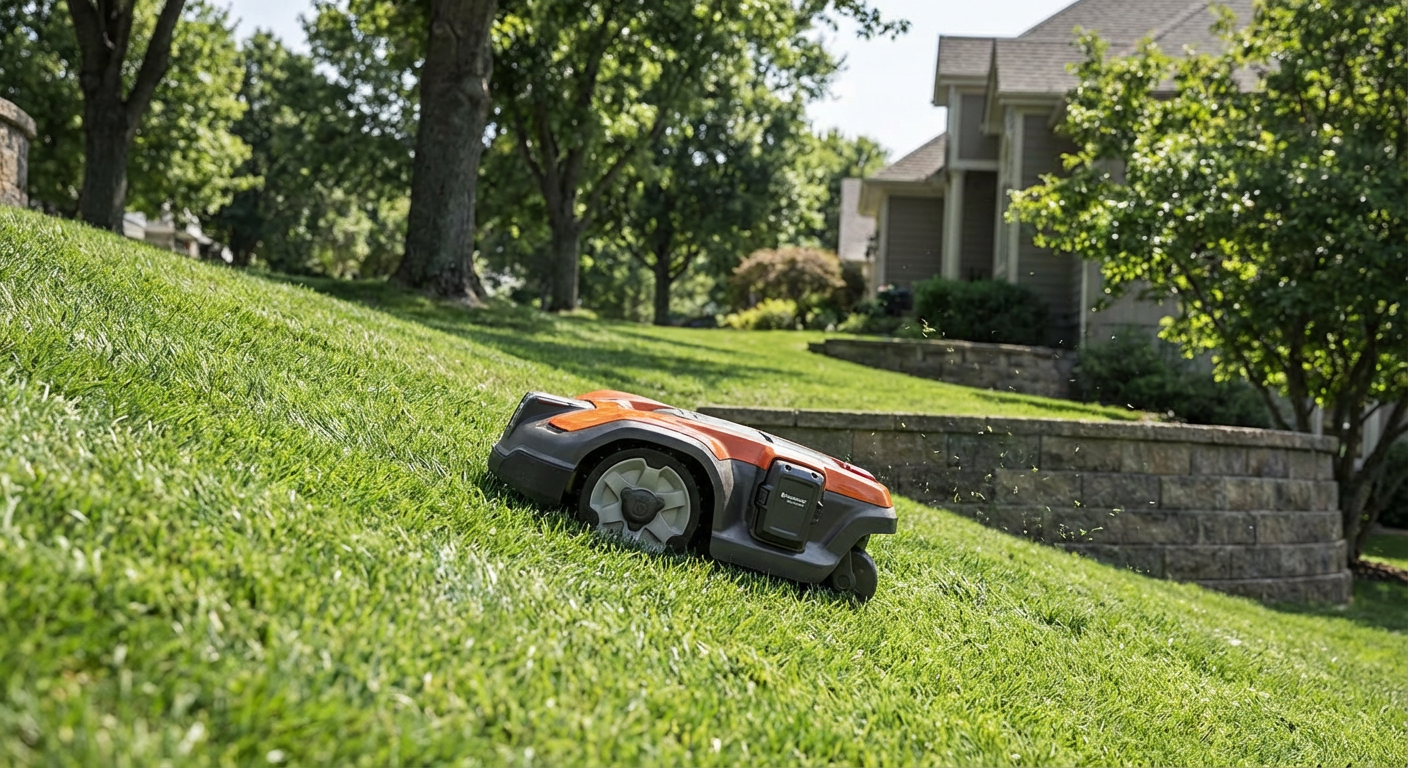


For homeowners with hillside properties across America, a standard robotic lawn mower is more than a failed investment—it’s a frustrating promise. When slopes exceed 20 degrees, you don’t need automation; you need all-terrain mastery. This guide reveals why four-wheel drive (4WD) is the non-negotiable core technology for steep-slope maintenance and how to choose a machine truly built for the challenge.
Owning a sloping lawn means you have enviable views, but also a unique maintenance dilemma: gravity. Traditional two-wheel-drive robotic mowers excel on flat ground but slip, stall, or even risk tipping on inclines, leaving uncut stripes and accelerating wear. Choosing the right tool means understanding that “slope performance” is no longer a marketing feature, but a complete engineering solution.
Part 1: Understanding the Challenge – Why Slopes Are the Ultimate Test
Before comparing products, you must confront the harsh physical demands a slope places on a mower:
-
Loss of Traction: This is the core problem. On a slope, gravity pulls the machine downward. A two-wheel-drive system (typically rear-wheel drive) easily loses grip on wet grass or loose soil, causing wheel spin and ineffective operation.
-
Stability Risk: When the machine moves laterally or turns on a slope, there is a potential for a shifted center of gravity to cause a tip-over. This damages equipment and poses a safety hazard during unattended operation.
-
Plummeting Battery Efficiency: Constant climbing requires immense torque, rapidly depleting the battery. A machine rated “for 1 acre” but designed for flat ground may struggle to cover even 0.5 acres on a slope.
-
Uneven Cut Quality: Slipping and stalling cause overlapping or missed cutting paths, leaving the lawn with a streaked, patchy appearance.
Conclusion: A robot designed for flat lawns is an expensive ornament for the hillside homeowner.
Part 2: Core Technology Explained – How 4WD Changes the Game
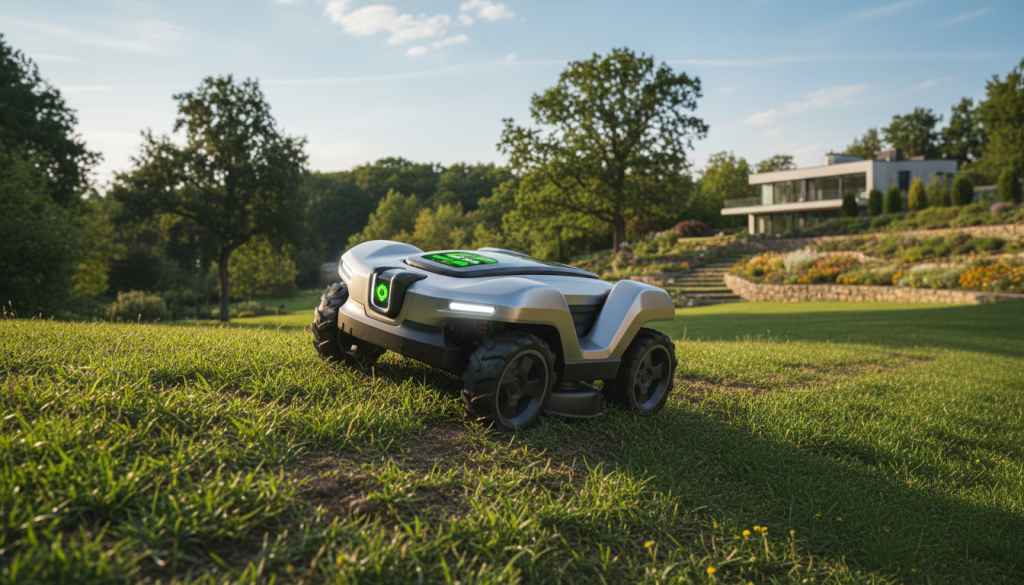
A four-wheel-drive system is the engineering answer to all the above problems. It’s not just about adding two driven wheels; it fundamentally changes the machine’s power distribution and terrain adaptation logic.
4WD vs. 2WD: The Fundamental Difference
-
2WD (Traditional): Power is delivered to only two wheels (front or rear). On a slope, weight transfer can reduce load on the driven wheels, diminishing grip and wasting power on spin.
-
4WD (Professional): Power is independently and intelligently distributed to all four wheels. Even if one wheel begins to slip, the system instantly sends torque to the wheels with grip, maintaining continuous forward propulsion.
The Core Advantages of 4WD:
-
Conquers Extreme Slopes: True professional 4WD robotic mowers (like those with adaptive torque distribution) can handle slopes of 40 degrees (approx. 84% grade) or steeper with stability. This covers the extreme end of most residential hills.
-
All-Weather, All-Condition Reliability: Whether on dew-slick grass, soft spring soil, or uneven ground, a 4WD system ensures consistent traction, delivering the “rain or shine” reliability you need.
-
Superior Path Efficiency & Lawn Health: Without slippage and repeated paths, the robot can execute more efficient, consistent mowing patterns. This saves time and battery and promotes uniform turf health.
-
Enhanced Safety: Better traction means more controlled descent speeds and stable lateral movement, significantly reducing the inherent risks of operating on steep ground.
Technical Takeaway: Look for a 4WD system with “adaptive torque distribution” or “electronic traction control.” This intelligent system senses wheel-speed differences in real-time and adjusts power dynamically, making it more efficient and smarter than a simple mechanical full-time 4WD.
Part 3: The Core Checklist for a Slope-Ready Robot
Beyond 4WD, a complete hillside solution must also have these features:
-
Official Slope Rating: Don’t trust vague “slope capable” claims. Demand clear, tested maximum slope capability data from the manufacturer (e.g., “45% grade” or “24 degrees”). Professional brands publish this data.
-
Low Center of Gravity & Wide Wheelbase: Physics dictates stability. Examine the product’s chassis design and weight distribution. A low center of gravity and a wide wheelbase provide better roll stability.
-
Strong Torque & Efficient Motor: Climbing requires sustained torque output. Inquire about motor torque specs (Nm) and ensure it’s a brushless motor (more efficient, durable, and suited for sustained high load).
-
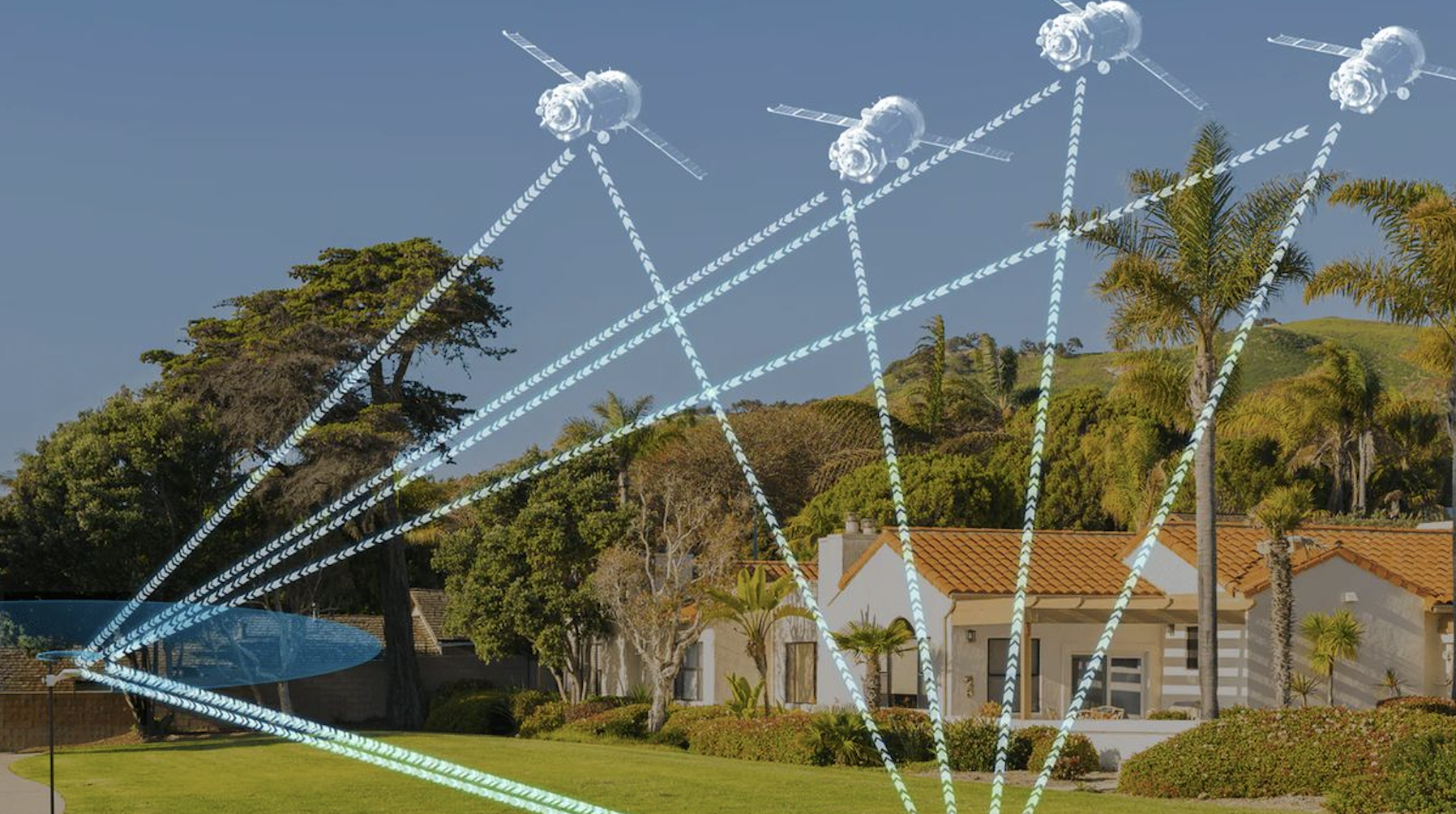
Smart Navigation & Precise Positioning: On complex slopes, satellite-based precision navigation (like RTK) is far superior to random bounce or boundary wire systems. It creates an accurate map, plans efficient climbing routes, and avoids pointless wandering on steep grades.
-
Adequate Battery Capacity & Smart Energy Management: Hillside operation drains batteries faster. Choose a model with high capacity (Ah) and voltage (V), and check if its software has a “slope mode” or smart power adjustment to optimize runtime.
Part 4: Product Comparison & Scenario Matching
| Feature / Scenario | Goko Aion 4WD (Pro Flagship) | Mainstream Brand 2WD Model | Entry-Level Robot |
|---|---|---|---|
| Core Drive | Full-Time Intelligent 4WD, Adaptive Torque | Rear or Front 2WD | Single or Two-Wheel Drive |
| Suitable Slope | ≤ 42 degrees (90% grade) | ≤ 24 degrees (45% grade) | Flat terrain only |
| Wet/Loose Ground | Excellent – Sustained traction | Poor – Prone to slippage | Not Applicable |
| Complex Terrain | Excellent – Handles ruts, roots | Fair | Poor |
| ROI | High – Built for the most demanding terrain, durable | Low-Medium – Prone to failure at limits | Low – Completely unsuitable |
Match Your Needs:
-
Gentle Roll ( < 25 degrees): A quality 2WD model might suffice, but 4WD will provide better stability and year-round reliability.
-
Moderate to Steep Slope (25-40 degrees): 4WD is an absolute necessity. This is the core audience for this guide. Investing in a professional 4WD system like the Goko Aion is the only choice that guarantees satisfaction.
-
Extreme Slope ( > 40 degrees): Requires a top-tier, engineering-focused 4WD solution. Scrutinize the manufacturer’s slope test data and real-user case studies rigorously.
Part 5: Beyond Specs: Cost of Ownership & Long-Term Value
Choosing a robotic mower for a slope is a long-term asset investment, not a one-time purchase.
-
Avoid Hidden Costs: An underpowered machine will struggle on the slope, leading to premature wear on batteries, motors, and drivetrains—costly repairs. The right tool works efficiently from day one and lasts longer.
-
Protect Your Property Value: A well-maintained, neat hillside lawn significantly boosts curb appeal and overall property value. A reliable machine is a partner in maintaining this asset.
-
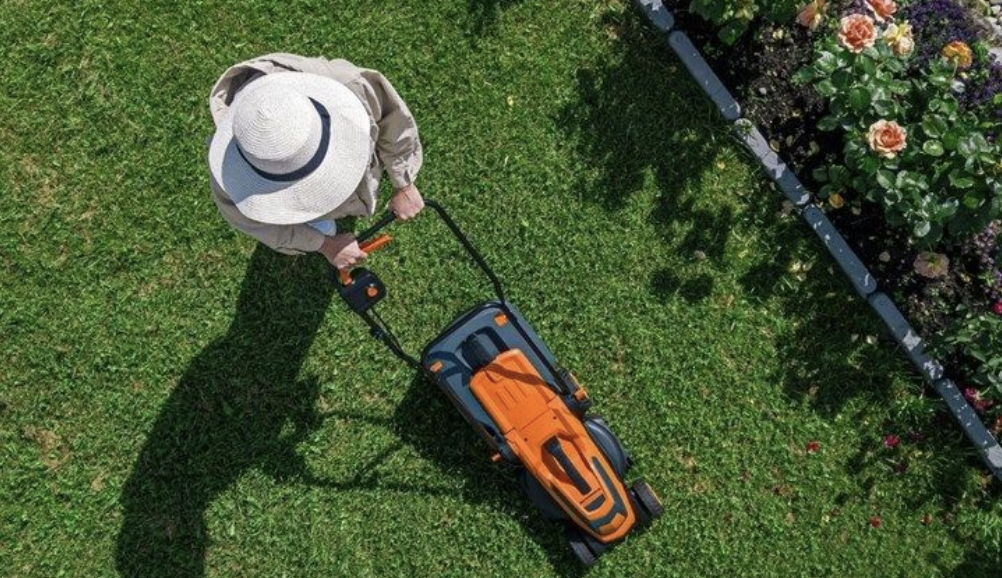
Reclaim Your Time and Safety: Ultimately, you are purchasing safety and freedom. No more risking a noisy ride-on mower on a steep grade or straining with a slipping push mower. True “set-and-forget” peace of mind belongs only to those equipped with the right tool for the job.
Final Recommendation:
Do not compromise for your sloping lawn. Traction is the first currency of a hillside robotic mower, and 4WD is the only reliable technology that provides it.
Before investing, seek a demonstration or detailed independent reviews from similar terrain. Ask manufacturers pointed questions: How is the slope data validated? How does the traction control system work? Does the warranty cover usage on slopes?
Your hillside deserves a solution that can climb with confidence, work with stability, and descend with grace. Choosing 4WD is choosing to conquer the terrain, not be conquered by it. It’s not just about mowing the lawn; it’s about safety, peace of mind, and reclaiming control over your entire beautiful property.